






Sustainability
Product
Our commitment to studying technological and technical solutions capable of minimizing the environmental impacts of our vessels.
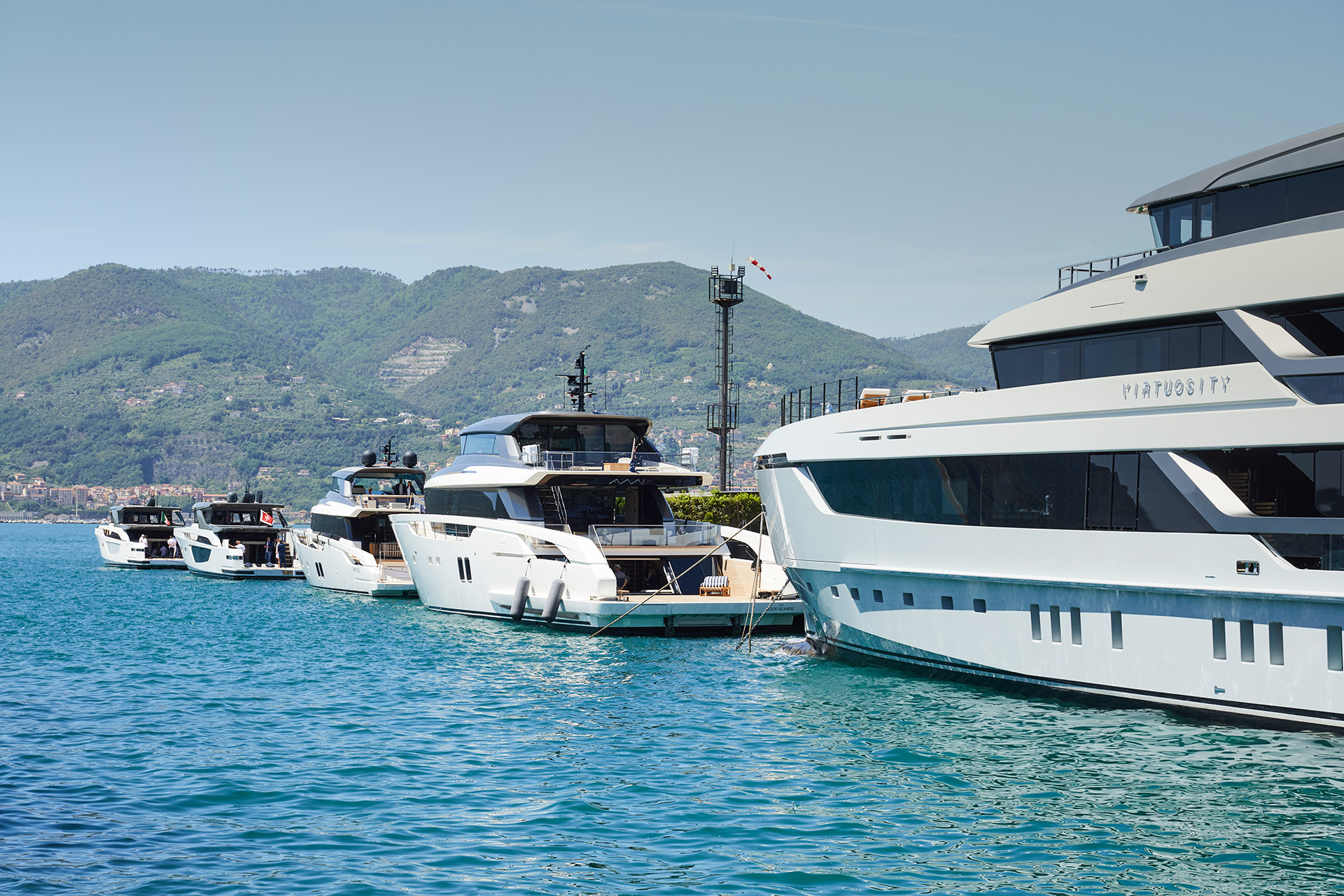
Our goal is to position ourselves as a proactive player in complying with increasingly stringent environmental regulations, thereby also addressing the diverse needs of our stakeholders. With our commitment formally set out in the ‘Road to 2030’ strategy, we integrate into the design and construction of our yachts an approach that combines aesthetic and functional excellence with a growing environmental commitment, adopting increasingly sustainable solutions that translate into concrete actions across all business units:
-
Yacht & Superyacht (over 24m): we are pioneers in the development of advanced technologies to reduce environmental impact. In 2024, we launched the first superyacht equipped with Siemens fuel cells for onboard load (hotel load) management. In 2026, we will introduce SHE, the first model in the Yacht range featuring innovative materials and currently under development with hybrid propulsion. Looking ahead, the Life Mystic project, part of the European Commission’s LIFE Programme, will further accelerate the development of sustainable solutions for large yachts.
-
Bluegame (motoryachts under 24m): our innovation roadmap includes hydrogen-powered tenders, tested in 2023 and used during the 2024 America’s Cup by the American Magic and Orient Express teams. In 2025, we unveiled the BGF, the Group’s first multi-hull yacht with assisted foils, with the aim of expanding the BGF range by 2027.
-
Nautor Swan (sailing yachts): with the acquisition of Nautor Swan, the Group entered a segment that is inherently sustainable by design, thanks to the use of wind propulsion.
The element that supports and ties together all these initiatives is our Research and Development function, which operates at Group level and across all brands. The main areas of innovation on which this activity focuses are sustainability, innovative technologies, computational fluid dynamics applied to the development of new technologies, regulatory requirements, and alternative materials.
With particular regard to sustainable innovation, the key initiatives include solutions to reduce onboard emissions, the introduction of sustainable and eco-friendly materials, and process innovations.
While technological innovation drives the transformation of our yachts, the Sustainability Team ensures that these advancements translate into measurable environmental benefits. This effort focuses on assessing and reducing the indirect greenhouse gas (GHG) emissions associated with our products throughout their entire life cycle.
In particular, we calculate Scope 3 emissions, addressing the following key product-related categories:
-
Category 1 – Purchased goods and services: emissions related to the materials and components used in the construction of yachts.
-
Category 4 – Upstream transportation and distribution: emissions resulting from the transport of materials to the production sites.
-
Category 9 – Downstream transportation and distribution: emissions associated with the delivery of finished yachts to customers and other outgoing shipments.
-
Category 11 – Use of sold products: emissions generated during the use of yachts after delivery.
All innovations introduced in propulsion systems and materials, both past and future, contribute to the reduction of these indirect emissions. By quantifying and monitoring these impacts, Sanlorenzo ensures transparency and guarantees that sustainability is fully integrated into performance.
RELATED
See also


